The Best Currency Pairs to Trade & Times to Trade Them? (Part 1)

 Two common questions that I get from aspiring forex traders are: “which currency pairs are best to trade?” and “what are the best times to trade?”
This two-part article will first address the question “which currency pairs are best to trade?”, and next week we will address the question “what are the best times to trade?” You should use this two-part article series as a reference guide to answer any question you may have about which currency pairs to trade and what times to trade them. Enjoy.
Types of Currency Pairs:
There are three categories of currency pairs; majors, crosses, and exotics. The following points will explain which currency pair’s fall into these three categories and the advantages or disadvantages of each.
• Majors
The “major” forex currency pairs are the major countries that are paired with the U.S. dollar (the nicknames of the majors are in parenthesis). We are also including silver and gold in this list since they are quoted in U.S. dollars and we trade them regularly.
EUR/USD – Euro vs. the U.S. dollar (Fiber)
GBP/USD – British pound vs. the U.S. dollar (Sterling, Cable)
AUD/USD – Australia dollar vs. the U.S. dollar (Aussie)
NZD/USD – New Zealand dollar vs. the U.S. dollar (kiwi)
USD/JPY – U.S. dollar vs. the Japanese yen (the Yen)
USD/CHF – U.S. dollar vs. the Swiss franc (Swissie)
USD/CAD – U.S. dollar vs. the Canadian dollar (Loonie)
XAU/USD – Gold
XAG/USD – Silver
Now, there are some things we need to discuss about the “majors” before we move on to discuss the “crosses”.
First off, many of the major currency pairs are correlated in their price movement, meaning they move almost identical to one another. For example, the EURUSD and the GBPUSD tend to move in the same general direction (not exactly the same), the GPBUSD is typically a bit more volatile than the EURUSD, but if the EURUSD is in an obvious up or down trend you can safely assume the GBPUSD is in the same trend, thus we say they are positively correlated.
The USDCHF is negatively correlated to the EURUSD, so if the EURUSD is moving higher the USDCHF is most likely moving lower. You will find if you take a EURUSD chart and a USDCHF chart of the same time frame and hold one right side up and one upside down, they will look fairly similar, this is because they are negatively correlated.
So what does this correlation business mean to you? It means you need to be careful when making your trading decisions so as to not double up your risk or trade against a position you currently have open. For example, if you enter a long on the EURUSD and the GBPUSD, you are basically doubling your risk, and there is really no point in trading both at the same time, you might as well trade one or the other, if there is a similar price action setup on both, pick the pair that the setup looks more defined on.
Similarly, if you enter a long position on the EURUSD and a short on the USDCHF, you are essentially doubling your risk. I have found the USDCHF to be very choppy compared to the EURUSD and GBPUSD, and I rarely trade the USDCHF as a result, I aim my focus on the EURUSD and GBPUSD if I want to trade a European currency against the U.S. dollar. This is not to say you should never trade the USDCHF, but just be advised that in my experience the EURUSD and GBPUSD provide better price action trading opportunities.
The EURUSD is also the most widely traded pair, and therefore it carries the highest volume of all currency pairs, this also means it is the most liquid, which is another reason I prefer it over its correlated counter-parts. The EURUSD makes up about 27% of forex trading volume, next is the USDJPY at 13%, followed by the GBPUSD at 12% of the total forex trading volume
• Commodity currencies
A commodity currency is a name given to currencies of countries which depend heavily on the export of certain raw materials for income. The major currencies that are also considered “commodity currencies” are the Australian dollar, Canadian dollar, and New Zealand dollar.
Gold and silver are actual commodities, so they can also be considered “commodity currencies”, and once again they are traded in U.S. dollars, as we noted above.
My experience trading the commodity currencies is that the AUDUSD, NZDUSD, gold and silver, are the best to trade, I tend to avoid the USDCAD as I find it fires off many “false” trading signals, this may have something to do with it being heavily influenced by the price of crude oil. Whatever the reason, I typically avoid trading the USCAD and advise my students do the same, perhaps at a point in the future the USDCAD will “behave” more logically, but at the current time I tend to avoid it like the plague.
• Crosses
The “crosses” are those pairs that are not paired vs. the U.S. dollar such as:
AUD/CAD – Australian dollar vs. the Canadian dollar
AUD/CHF – Australian dollar vs. the Swiss franc
AUD/JPY – Australian dollar vs. the Japanese yen
AUD/NZD – Aussie dollar vs. the New Zealand dollar
CAD/JPY – Canadian dollar vs. the Japanese yen
CHF/JPY – Swiss franc vs. the Japanese yen
EUR/AUD – Euro vs. the Australian dollar
EUR/CAD – Euro vs. the Canadian dollar
EUR/CHF – Euro vs. the Swiss franc
EUR/GBP – Euro vs. the British pound
EUR/JPY – Euro vs. the Japanese yen
EUR/NZD – Euro vs. the New Zealand dollar
GBP/AUD – British pound vs. the Australian dollar
GBP/CHF – British pound vs. the Swiss franc
GBP/JPY – British pound vs. the Japanese yen
NZD/JPY – New Zealand dollar vs. the Japanese yen
Now, I am not advising traders trade all of these crosses, there is certainly a short-list of the crosses that I trade and that I recommend all my students trade. That short-list looks like this: AUD/JPY, EUR/JPY, GBP/JPY, and NZD/JPY.
These four cross pairs are the most widely followed and make a nice addition to the major pairs mentioned above. Keep reading and I will condense all of this down at the end and show you how to make a concise “watch list” of currency pairs that you can follow on your forex trading journey.
• Exotics
The “exotics” are those pairs that consist of developing and emerging economies rather than developed and already industrialized economies like the majors. Here is a list of some of the more commonly traded exotics:
USD/TRY – U.S. dollar vs. the Turkish lira
EUR/TRY – Euro vs. the Turkish lira
USD/ZAR – U.S. dollar vs. the South African rand
USD/MXN – U.S. dollar vs. the Mexican peso
USD/BRL – U.S. dollar vs. the Brazilian real
The exotic currency pairs are not the best place to start as an aspiring forex trader, I still do not trade them and there are reasons why. The exotics are much less liquid than the majors and even the crosses. This means there is more risk built into the exotics, this makes them more prone to “slippage” and it also means they have wider spreads than the majors and the crosses.
(Note for total newbie’s; the “spread” is the price you pay your broker for “making the market” for you, it is the difference between the bid and the ask price, you automatically pay this every time you enter a trade, it can be very low on the majors, sometimes only 1 pip, the exotics can have very high spreads that are usually well over 10 pips. Essentially, the spread means you are negative on a trade from the beginning, so you must overcome the spread to get into profit, no sense in purposely putting yourself in the hole 15 or 20 pips by trading the exotics when you can trade the majors and only be 1 or 3 pips negative. Put the odds in your favor)
The exotics can also be much more volatile and thus less reliable than the majors and crosses, due to the thin liquidity in the exotic pairs they can move quite quickly and “jump around” or “slip” much more often than the majors or crosses. There simply is no real reason to worry about or trade the exotics, the majors and crosses provide you with more than enough price action trading opportunities to have a successful trading career. Traders who attempt to trade the exotics often get caught up in analysis-paralysis and are likely guilty of over-trading, they are certainly more susceptible to over-trading. Bottom line; ignore the exotics.
Create your own forex currency pair watch-list:
Now let’s condense this entire article down into some useful information that you can apply immediately to your forex trading routine.
Metatrader 4 has many little nuances that a lot of traders are unaware of. One of them is how to create a “market watch list” of the currency pairs you want to follow. You can also create a “pop up” price list that allows you to get a quick view of the current price quotes of all the pairs you follow, you can adjust the size of this pop up list and it will stay that way so every time you hit F10 you can see all the currencies you follow in large text. Here are the instructions to create a market watch list and a pop up price list in MT4:
Screen shot of my market watch list:
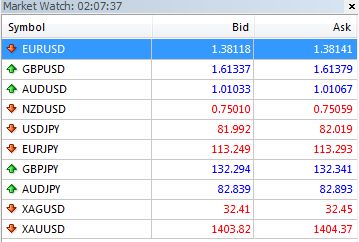
1) Click on “view” at the very top of your screen.
2) Click on “market watch” within the “view” menu
3) You should see a screen appear with some or all of the currency pairs available, and probably gold and silver.
4) Now, right click anywhere in the “market watch” window, you should see a menu appear with various options.
5) This is where you can pick and choose which currency pairs you follow. You will need to first select a currency pair if you want to hide it, then right click and select “hide”, it will now disappear from your market view menu. (note; if you have an open trade you cannot hide the quote of the currency pair from the trade you are in)
6) To reverse this just lick “show all” and all the currency pairs will pop back up.
7) You can also just click on “symbols” and then go through and hide or show which ever currency pairs you want.
8) Once you get your watch list set go to “sets” and save it. You can save multiple watch lists if you want.
9) Hit F10 and a pop-up price menu of your currently opened watch list will appear. This is a handy little short cut that you can use to check the prices of all the instruments on your watch list very quickly so that you don’t have to have the watch list window open all the time.
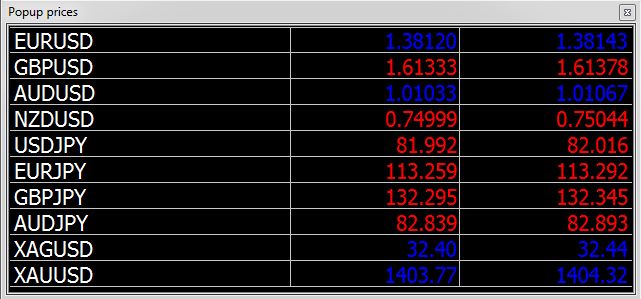
Now, the pairs that I recommend you include in your watch list are the following: EUR/USD, GBP/USD, AUD/USD, NZD/USD, USD/JPY, EUR/JPY, GBP/JPY, AUD/JPY, XAGUSD, and XAUUSD.
This gives you 10 different currency pairs to follow, more than enough to trade with. You really should pick your favorite 4 or 5 of these and follow them very closely and master one forex trading strategy at a time, once you progress you can add all 10 currency pairs to your watch list.
Remember to stay patient and avoid over-analyzing, over-trading, and over-leveraging. Stick to these core currency pairs and master my price action trading strategies and you will be well on your way to becoming a successful Forex trader. Stay tuned for next week’s follow-up to this article where we will discuss the best times to trade the Forex market.
Please Proceed To Part 2 of this Article Here >– Best Times To Trade Forex Currency Pairs


About Nial Fuller
Nial Fuller is a Professional Trader, Investor & Author who is considered ‘The Authority’ on Price Action Trading. His blog is read by over 200,000+ followers and he has taught 25,000+ students since 2008. In 2016, Nial won the Million Dollar Trader Competition. Checkout Nial's Professional Trading Course here.


Gday Nial this article has been helpful I didn´t know that pairs can run the same direction while while the other is volatile and some oppose each other when concurrently traded, thanks for finding you, may you be blessed for your generosity.
Nial, thank you for the article ….. could you write down the currency pairs that you currently trade?…. /because this contribution of yours is about 9 years old/…
thank you very much
are these still the pairs or has it changed in 9 years
EUR/USD, GBP/USD, AUD/USD, NZD/USD, USD/JPY, EUR/JPY, GBP/JPY, AUD/JPY, XAGUSD, and XAUUSD.
Less on the yen crosses nowdays.
Hi Nial Fuller. I really found this article helpful i really learnt alotand I want to say well done. I just subscribed
I found that so useful. Thankyou
U rlly talked forex sense! thanks
Thank you sir
Many many thanks sir
Thank you Nial
clear enough sir thanx
Thanks Nial for this beautiful piece. Straight on point. A great guide for me. Can’t wait to see the second part.
Part 2 link is under the Part 1 article
people have said alot about this great article of yours, but i will also thank you, if i have thousand tongue i use all of it to say Big thank you. thank you once again.
This articles is superb it helps me not to run up n down.Only to focus on relevant pairs ,though am a newbie.Thanks.
Thanks Nial, very helpful. This article has helped me cut on looking at other pairs that i didnt have to look at. Big up!!!!!
Thanks Nail for this very useful article. I am a relatively new trader and your articles have helped me a lot.
I would have saved a lot of time, but it never occurred to me that somebody can give the most important things in a simple way for free. In the articles there are things as accurate as arrows in the center of the target. Amazing.
wow what an awesome lession,how can i book your training sessions
Thank you for sharing its great
Nice.informed alot
thanks very much
Thank you for bringing simplisticy and clarity to my mind am no longer confuse.
Brilliant idea that can help to succeed in the forex market
Thanks for your information.More helpful artical.May you live long
THANKS FOR YOUR DIRECTION
Very useful information that will permit me increase the trading knowledge I need. The concept of doubling the risk is something I was not aware of.
Thanks.
HELPFUL,,, thnks so much
Wow!very impressive man.
Wow excellent.
For the first time I understand what a SPREAD is
Thanks
It really really helpful artical . God bless you man
Fantastic explanation you are a star. Very beneficial.God bless You my friend.
Learning about market
Thank you very much I learn’t a lot today
this will defiantly help me alot thanks a million
thanx a million, i think this will help
Thanks, very much , my little knowledge has exploded
Amos
Cameroon
Thanks for some other informative blog. Where else could I am getting that type
of information written in such an ideal approach?
I’ve a mission that I am simply now running on, and I have been on the look out for such info.
Hi Niail, this is another great post from you. You have tremendously helped me on my journey. I just need to make a suggestion, that you recommend a maximum of 2 Pairs for beginners and especially people who find it difficult to multi-task, from my experience trading more than 2 Pairs makes me over trade and lose focus, which can negatively affect your account. Please include that as a warning. Thanks and keep doing the good job.
Thank you very much , very nice
Thank you very much ..
Again ..thank you
heck yes! Stay away from USD TRY for shorter term stuff is my advice!!! If you dont you’ll soon learn why…
I was having an amazing day until I placed a trade with that pair. Still well into profit… but its taken the icing well off the cake!!!!!! the price jumped for a split second way above the candles and took out my stop… the candles don’t even come close to that point!
Nail, great and to the point. Is there anyway you can give me an idea of the best times or sessions to trade your recommended pairs in.
your article is simply the best I had come across on the internet regarding the subject matter and I truly wanna say a huge thank you for giving away information this vital for free Mr Nial.
Sir,you are a blessing the information is direct and simple to understand
thanks nial… no bullshit , straight to the point, great article, great help!
Hi Nial, I have just discovered your site and it looks really good. It is a straight talking no bull communications vehicle and I am impressed. I
Best Wishes and thank you, I will be checking out your site on a regular basis.
Ireland
thankyou sir, for providing such type of valuable information for the beginners.
That’s a nice way of breaking down the currencies, well done. Thank you.
I have learnt a lot in a short while. Thanks so much
Thank you Nial, I’ve organized my currencies in order. Very helpful.
I also think that whipsawing pairs can be traded profitably i have seen guy posting on youtube how he trades usd/Thb pair profitably. But i dont like whipsawings at all… more reliable trend is always better for me
Thank you very much for the useful information.
Now I’m at least looking only at 10 currency pairs with well organized chart area.
I really thank you for all your help.
First ! Thank you for sharing your expertise !! So I trade EUR/USD and NOT GBP/USD in order not to duplicate . Or vies versa . What is a good pair to trade when I go long either one of the above to trade short in order to catch opportunity at the same time. I only trade 2 pairs at one time. Thank you in anticipation of your advice !!
I studyed what was on here for three days I put £100 in to the market on the 4th day and had a 50% profit it in one hour amazing lol thanks for this I hope to do it for life
Thank you very much, your article is really one of best in providing practical information and knowledge.
My best regards
Thanks, now i have an idea where to start.
I LEARNT SOMETHING GREAT TODAY…
KUDOS TO YOU FOR THIS PUBLICATION…
GREEN PIPS ALL THE WAY TO YOU …
SINCERELY YOURS
APPLE TRADING CONSULTANT
NIGERIA
I almost to be profitable trader because of you Nail. Thank you so much.
this site is one off the best, i like this article. thank you
LOVE WHAT I SEE I HAVE I READ SO FAR
Excellent article for newbie, but what are sysmbols for xagusd and xauusd in US?
XAG Silver
XAU Gold
USD US dollar
I’m very grateful for this article & more that I’ve read.
I’m new working on my demo a/c and I didnt know which currency to trade.
The articles are very enlightening!
Hello Sir,
Please tell me positively correlated for NZDUSD & EURJPY
Thank you
Thanks Nial, a very useful article for traders and especially the beginners.
Brilliant! Could you help me with risk management? I currently will have a stop loss of 5% of what my current capital is. I think that is fine. But i would like to know what would be a good percentage to take profit. thank you again
Your profit target (TP1) should be 5% as well.
Hi Nial, thanks again for sharing your valuable infor, really appreciated!
Thank you so much “Nail” everything you said is true, I’ve witnessed through my past experience in the market expecially the movement of some currency pairs like USDCAD. Thank you once m!ore remain blessed
This is a good one, Nial. I have been stuck to just gold and Eur/usd. I’ll try some other pairs too.
Great article Nial, very useful especially for beginners. Having said that I can not find the silver and gold. I will have to go through the manual I guess :). Once again thanks
Michal
Hi Nial,
Great article, very practical and applicable.
If you could specify the correlation between EURUSD and the pairs you suggest (i.e. GBP/USD, AUD/USD, NZD/USD, USD/JPY, EUR/JPY, GBP/JPY, AUD/JPY, XAGUSD, and XAUUSD), so that we may be able to mitigate the risks, would be quite useful.
Thanks.
Tasos
Thank you.
Thanks! Great page for beginners! Liking what I’m seeing so far :)
Thank you more than expected. This is one of the best site i visited since i started my journey into the world unlimited money.
thank u 4 everything u re doing 4 the forex community,God will continue to bless u,all ur articles re an eye opener
Very good ideas that will make one exhibit patience
Wish I saw you site last month.
Thanks for the help and I will def recommend your advise to anyone getting into trading for the first time.
Thanks :)
that was a very helful post,thanks a lot ,im totally new to this,im from christchurch,n.z, was just wondering would it be a good time to buy some u.s dollar say 5000$ since there is lot of news about the nz dollar falling against u.s by heaps? ,also how long do you think would it take before the current situation changes…would be really thankful if you could give a advice on this :)
Wonderful, this has giving me great direction. I like to backtest my methods and this has just saved me a plethora of time. Thank you soooo much.
Great explaination too- as always. Keep up the good work.
Clear, concise and informative – excellent
Neil I like your information a lot. I am trading for a long time now and I am all over the place with my thoughts and actions. Following your guidelines and lessons I can suddenly find even more pleasure in trading. I can see the trees from the forrest so to speak. I am 6o and you are 20 so I use your young cleverness to supplement my bit of accumulated wisdom. Planing to get your Forex Course. Thanks for all.
Regards Hansjoerg Balzer – Brisbane Australia
Thank you for all this info Nial
Louis
South Africa
Gracias Neil, como siempre tus articulos son excelentes y de gran ayuda para todos los que estamos aprendiendo.
Enhorabuena!
Hello:
This is one of the best site I ever seen on FX trading. I am reading every one of your articals and all are excellent. This one will stop me from jumping like Thomas said above. Keep up the good work !! Learning a lot from you videos and articals. Thank you
good article nial,now i can stop jumping around like a yoyo
and focus on 5 main pairs,
thanks man..
Hallo Nial, great info as usual, but wanted to add that AUD/USD is a good choice for us newbies, as it can be fairly predictable at times and more importantly it can be traded with less margin committed in mini and micro accounts, especially now that the Euro and Sterling are so high relative to the U.S. dollar.
The difference can be employing $1500 vs $1000 of available margin, and also typically the spread is quite favorable.
Thanks for all your efforts.
I found it incredibly hard to delete around a dozen pairs and I’m down to the recommended 11. Now that I’ve taken the plunge I cant believe I spent so much time and energy analysing so many charts. Its taken a long time to turn my thinking around that less charts mean more success, and not the other way around! I have noticed that the eur/jap and gbp/jap are also very closely correlated. Great stuff Nial!
Hi Nial, thanks a lot, that was a great article. Actually, i’m trading since 3 months now on demo using Price Action and i’m doing well. I was actually begin to see the relation beetween some pairs, cross related and counter cross related, now all is clear :). thanks Nial.
Dear Nial
Thanks for you info about EURCHF and GBPCHF?
is there any mistake trading them?
Regards
Mamoun
I don’t like to trade those pairs. I don’t find them as profitable. They also don’t see the same frequency of clean price action setups as one would find on say EURUSD or GBPUSD
nial fuller, ur the best! be blessd
Hi Nial, what I can say is that you do a great job, I already started to complete my currency list, as before I was watching more than 20 at a time (stupid, for a beginner). Thank you for the great info!
another complete and consise article on the real aspects of forex. and not some mumbo jumbo to intice you to trade with wild ideas and schemes.(ie buy this system or cant fail robots or gaurunteed to make 10,000 pips a month crap) in the approx 1 year that i have been a member i have never found anything that is contrary to what is explained here. Its always the Truth good or bad for my ego it is the truth.
So again Thank You Nial
trimax
Hi Nial;
Always good to have confirmation from the perspective of someone in a different time zone.
HI Nial, great info and to the point, the best thing about your site is there is no pipe dreams of BMW’s and money dropping in on autopilot, I enjoyed your course and have seen a great improvement in my ability to trade the FX market.
Great article for newbie but i knew most of facts specially
correlation and risk doubling. But great to understand commodity currencies. I have made list as recommended.
Thanks Nial, you have done what masters cannot do this is good.
Thanks nial, Im realy learning alot.
May God bless you Nial.
Thanks a lot for sharing this valuable information, Thing are more clear and also interesting,And increased the chances of doing right trades … thank you Nail.
Nial, this article is like good food to a newbie….
Can’t wait to digest part 2
Thank you Nial, as usual you’re always very relevant, the information you give is invaluable.
This has cleared my doubts about which pairs to trade. Thanks a lot for sharing.
Hi Nial,
I’m glad you touched up upon this subject. I always wondered about the coralation between certain pairs.
I agree with you, having opened positions (both long, or both short) with two positively corelated pairs would double your risk, but in the mean time it would double your profit chances as well :-) I think if you keep the risk reward ratio at an healthy 1 : 2.5-3 you are doing the right thing…? Just my humble opinion…..you are the master !!!
Thanks a lot Nial !
o.k. this is a great read,I have held of forex trading as I was always thinking “which pair to trade”
once again you put thing into simple terms for us.
your a legend mate.
You know what?…. YOU ARE THE BEST…..
Thanks Nial.
Yet again, concise, spot-on and very helpful.
you are great i suppose you that u r my greatist teacher i have learned a lot about forex i respect you much thanks for this lesson
Hi Nial
Many thanks for this info and about metatrader4.
Kind regards
Don
Hello Nial,
Excellent articles. L luv it.
Thank u.
Rikus
Hi Nail,
Thanks a lot for giving us a very helpful advise
on selecting the right currencies pair to trade.
Best Regards,
Geoff
Thank you Nial.very helpful as always.
Thanks Nial for this very useful article,you’re a great mentor and are helping me to improve my trading.
Thanks Nial,
Very valuable lesson. Looking fwd to the next one!
William
Thanks for this revelation. It makes a lot of sense for a trader to restrict himself to a few pairs that are not only liquid but also have some degree of predictable market pice action that will allow for simple analysis.
excellent
Thank you Nial, another great article with info. I can really use. Very happy to be your student!
yes, good point nial, i myself only trade with the mayors they are clearly more liquid and they are a better deal on the spread..
I was always wondering about how currencies inter-relate. Thank You Nial for taking the time to explain this aspect.
Best Regards,
thanks nial…good article…wait for part 2
Highly educative. Thanks for the info.
Splendid again Nial, like others i anxiously await your follow up lesson. Its really freakish how you “hit the nail on the head” especially when it is precisely what i needed to learn at my stage of trading knowledge. I wonder if you or any of your followers have created a flow chart of the most common basics one should be considering prior to, in and after placing a trade. It strikes me that there is such a lot of information to grasp and understand from a holistic perspective through to identifying specific risk ration,entry, exit and money management. I am starting to prepare a flow chart for this purpose. Thanks for all your shared wisdom.
Great article as usual.
dear nial ,your article is very fine and easy to understandand giving some cocrete knowledge which is very useful for new entant in forex market. keep on writing .i am thankful to you.
Thanks for your great articles. I am just starting out and am enjoying absorbing everything, every time I read something of your my thinking moves along – love it! Looking forward to doing your full course soon,
Gye :)
Sydney
Thanks Nail, needed that, brokers have hundreds of currencies, indexes, futures,stocks, etc, etc & it is so hard to find , eg the ASX 200, now I know how to make a watch list from such a huge choice,
Thanks
brilliant Nial, thank you for the article.
Hi Nial
This information is hard to find all in one place so I have printed it out for reference. I know I am watching too many currencies at once, so this has again spurred me on to reduce the number.
Thank you so much
Wendy
Nial your the man, great info once again, cant wait for part II.
Thanx
Another great an timely insight to trading,everyone has to work out in their own mind how to trade and everytime I seem to be working out something You seem to bring out an article reinforcing my theories.I am taking your advice and learning price action one at a time and decided to concentrate only on three pairs to start with eur/usd aud/usd[your local currency and gbp/usd my local currency.I did not know the euro trading volume was that high.Also your advice on starting on daily timeframes is spot on as it helps to stop overtrading to start with and also teaches patience which I think is so Important,along with position sizing.You can’t be a master without first being a novice!
Hi NIAL. I have found usd/cad dificult to trade, & have now given up useing it. I have used the NZD/USD without much success on late evenigs on uk time.
UNCLE DAN.
Nial, Thank you very much for your lesson!!, you have helped me a lot to simplify and clarify my confussed search for the right pairs to analyze. Waiting for the following lesson!!; by the way how do you think about to look for the strongest and the weakest currencies to set or reinforce a bias to trade?
Best Regards.
Great Article Nial. I am finding that on the 4 hour charts on most pairs, the best price action occurs at the 8:00am to 12:00 pinbar. In my case, it would mean having to get up at 2 in the morning to make a trading decision on this pinbar. Can you address whether or not you find the best pinbars at certain times of the day on the 4 hour chart?
Thanks Nial. Excellent article as usual!
tq Nial, great discourses, much appreciated.
cheers…
Hi Nail,
Another great insight into forex.Anyway this confirm my watchlist. Many thanks for your commitment and support to all.Have a restful weekend.
Rufus
Thanx Nial! I had mess of charts I was looking at. No exotics, but far more than ten. This simplified my trading in epic proportion!
PAX
This is great. When I first started trading 2 years ago, I used to look at over 20 pairs (22 to be exact) because I figured the more pairs I looked at, the more chances I had to trade and make money but the exact opposite was happening. I was overtrading and losing money. With this bit of insight I can now concentrate on only 10 that will increase my odds of being in better trades. This article was a tremendous help Nial. Thanks!:-)
interesting, will be good to hear when you think the best times to trade these are :)
Oh and thanks for the MT4 lesson – will make a difference too.
Nial, thanks for writing and sharing this article. Look forward to part two as one of my big issues is the times to trade – just cant get a handle on that.
Thanks for this excellent information.Though you may not fully realize it, your efforts are really touching many lives.
Thanks, I wish you well for this article today, you are very good to help others. God will always bless you.How i wish every man comming to forex trading will first learn your trading system and course before doing any thing else. Thanks again.
This is awesome!!! Thanks and regards
Well, this tips are awesome! Just great! Please keep this up as you are impacting lifes.
An act for simplification. Thank you Nial.
Great infomation, it give me wider infomation about the market to trade.
thanks
cheers
I agree with you, however, I think it is a good strategy to at least look at some of the other pairs especially when there are mixed signals with highly correlated pairs. It helps it detecting when banks are stop hunting especially around large whole numbers.
I disagree. I have been trading a long time.
Great article Nial .I just basically trade the Eur Usd But what are your thoughts on Gold and silver? Do you think this upward trend is still intact for some time?
Very helpful and informative. Thanks
Hello Mr. Fuller
Appreciate the article and have now set market watch to what you suggest.
Nial,
I have followed your E-mails for awhile, thanks for the info, it is always interesting and informative. Been Forexing for about 14 months. At present I am wining about 50% of my trades. Not great, but enough to start to make some money. I should retire in about 1 year, then will devote more time to Forex. Most likely will take your course before that time. It is never too late to learn. I have morphed into a 75% or more price action trader with the other 25% using indicators that I keep changing to help confirm the trades. Trying to decide which indicators I like the best. I only use two indicators at a time. This is getting kind of long, so I will sign off. Just wanted to let you know how much your info is appreciated. Have a good day.
PS. I was in New Zealand (38 days), Australia (7 days), in 1976, Operation Deepfreeze. You have a beautiful country and friendly people. Hope to visit when I retire. Good day.
hey winning 50% of your trades is good. Just apply risk reward.. and you can make money simply by applying correct maths/parameters to your position sizing.
Very useful information .Thanks.
That’s so true about the USD/CAD. It’s the most puzzling currency pair. When I used to try trading it I usually ended up scratching my head with less money in my account. I agree with you, stay away from that pair.
Great article, I really needed this. One of the things I like about your articles and approach, is the level of relevancy. Can always count on you for some solid and honest advice.
Thanks Nial
Nail,
Thanks for all the teachings on forex!!
I just thought I will give you my favorite watch list:
EUR/USD, GBP/USD, EUR/CHF, EUR/AUD, EUR/JPY.
Greetings from South Africa.
Nial, Thank you for your investment in us. Your forthright manner is most refreshing and your presentations are helpful and appreciated. Just revised my watch list and charts… :-)) Thanks again…h
Indeed… i was hoping for someone to give me a better insight and consolidation of the forex markets tradable pairs! Thanks Nial!
extremely interesting.
Great article indeed. Thanks Nial.
Thank you very much Nial, I have only been looking at cable, but having had a look at some of the pairs you have suggested I can see other possibilities, thank you very much.
Two quick observations, since the decoupling of the eur from the chf, and the chf becoming the preferred safe haven currency in risk averse conditions.It tends to trade a lot, consequently GbpChf,Eurchf are good pairs to trade(made a lot of money on gbp chf daily chart trading)
The other issue i that since 2010, usdchf has been easier to trade than Gbpusd
That may be so, but my article is based on my experiences and I truly don’t want people focussed on the wrong pairs. I believe that GBPUSD is a better pair than the USDCHF to trade/follow. Good on you for making those trades, well done.
Thanks for your daily training courses
What about EURCHF and GBPCHF?
do advise or not?
Please support
Regards
Mamoun Ali
No i don’t trade those pairs Mamoun.
Am very happy for today post,i believe this one will give me another guardline to trade my demo account successfuly.Thanks.
Very concise and helpful information. The “when” is at least as interesting and important. Thanks for your sincere desire to help us.
Steve P Kent, England
Thank you Nial. This is what I need right now. Its amazing how easy your strategies are but only after you shared them… keep up the good work!
I was one of those asking this question!
This will prove a very popular article and one that complements the course material.
Thanks Nial.
thanks for the timely reminder to concentrate on pairs that are not directly linked and thus reduce risk
Fantastic, practical advice Nial! Thanks!
Your list is very similar to mine.
I just find the NZD/USD a touch expensive pip wise.
Nial, this info is much appreciated by all newbies like myself :)
Hi Nial
This is a very good and helpful article. Thank you very much!
Hi, very nice article clear and very well explained
as usual, looking forward for part 2.
Best regards
Gary
I am sure this article will be very useful to me in my trade!
as every other article before this….
thank you Nial
Very good insight Nial. For a starter like me, i’m tempted to overtrade by looking at 10 pairs for a “good” set up which gives me confusion and analysis paralysis.
Good knowledge. Thanks
Michael
A+ article, appreciate.
Hi Nial,
Thank you very much for producing this.
Thanks and Regards
Gurpal
Hi, i got it but new trader must compute position size n different way compared to currency pairs.
Thanks for a good stuff.waiting for part 2
Thanks Nial
you are impacting markets, excellent and useful simplified tips.
regards
Patrick, Harare, Zimbabwe, Africa.
Great article Nial. look forward to part 2
Hi Nial,
Very good one as always. This give me a good picture of what has to be traded and what has to be avoided. Good one keep it up. Thanks.
I waited a long time for this article. Thanks a lot Nial!!!!